Area
Sweetness is mainly found naturally in Central Asia. It grows in many parts of our country. It grows naturally in tugai forests and along streams.
Botanical description of the plant
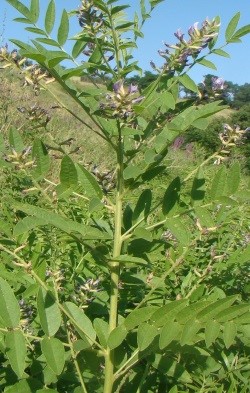
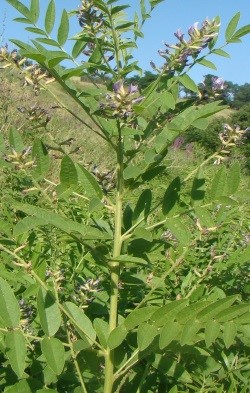
Licorice (Latin: Glerrhizza glabra) is a perennial plant belonging to the angiogenesis family. It grows mainly on mountain slopes, groves, river banks, stream banks, saline and sandy soils, and sometimes even among crops. Root bullet root, forms underground rhizomes and penetrates to a depth of 5–6 m. Stems erect, branched or unbranched, covered with hairs, reaching a height of 50 cm to 200 cm.
The leaves are intricately vine-shaped, green in color. The flowers are bisexual, yellow in color, forming a simple umbrella inflorescence on the leaf axils. Fruit 3-7 seeds, legumes that do not open when ripe. The seeds are hard, smooth, green in color. Shirinmiya blooms from late April to May. The fruits ripen in August and September.
Medicinal properties
Syrup is made from the root. It has expectorant, anti-inflammatory and anti-allergic effect, accelerates the healing of gastric and duodenal ulcers in chronic inflammatory diseases of the gastrointestinal tract, especially in cases of increased gastric acidity. Glycyrrhizic acid undergoes metabolic changes in the body and has a corticosteroid-like effect. It also increases the nonspecific resistance of the organism, has activity against staphylococci, mycobacteria of tuberculosis, Escherichia coli.
Growing technology
The licorice plant is propagated mainly by three different methods, from seed, rhizome, and seedling cultivation. The first method is done by sowing seeds. This requires the selection of well-established agronomic techniques, well-plowed in the fall, weeded, mulched, chiseled, leveled areas. The prepared areas are spaced 70 cm apart and the seeds are sown at a depth of 1-3 cm. Sowing can be done in the fall and early spring using mechanization. 4-5 kg of seeds are sown per hectare. After sowing the seeds, the area is irrigated and the soil surface layer is required to be kept moist until grass is formed. As the soil temperature exceeds 100C, sprouting of grasses is observed. The lawns are mainly worked between the rows as they reach 20-25 cm. During the growing season the plant area is watered 8-10 times. Cultivation is carried out every 2-3 times after watering, and the row spacing is treated and maintained with ketmon. However, given the relatively low level of seed germination in saline soils (1.5-2.0%), it is not possible to establish arable land of industrial importance by greening licorice seeds. The second method is propagated by rhizomes. In this method, the plant material, ie the rhizome, is excavated from the fields. Using sharp-edged tools, rootstock cuttings of 10-15 cm in length are cut. It is recommended to spend 2000-3000 kg of rhizomes per hectare. In the pre-prepared and agronomically correct areas, seedlings are taken at intervals of 90 cm, and rhizomes are planted at a depth of 5-8 cm using mechanization.