"Mushroom Garden" project at the Tashkent Botanical Garden
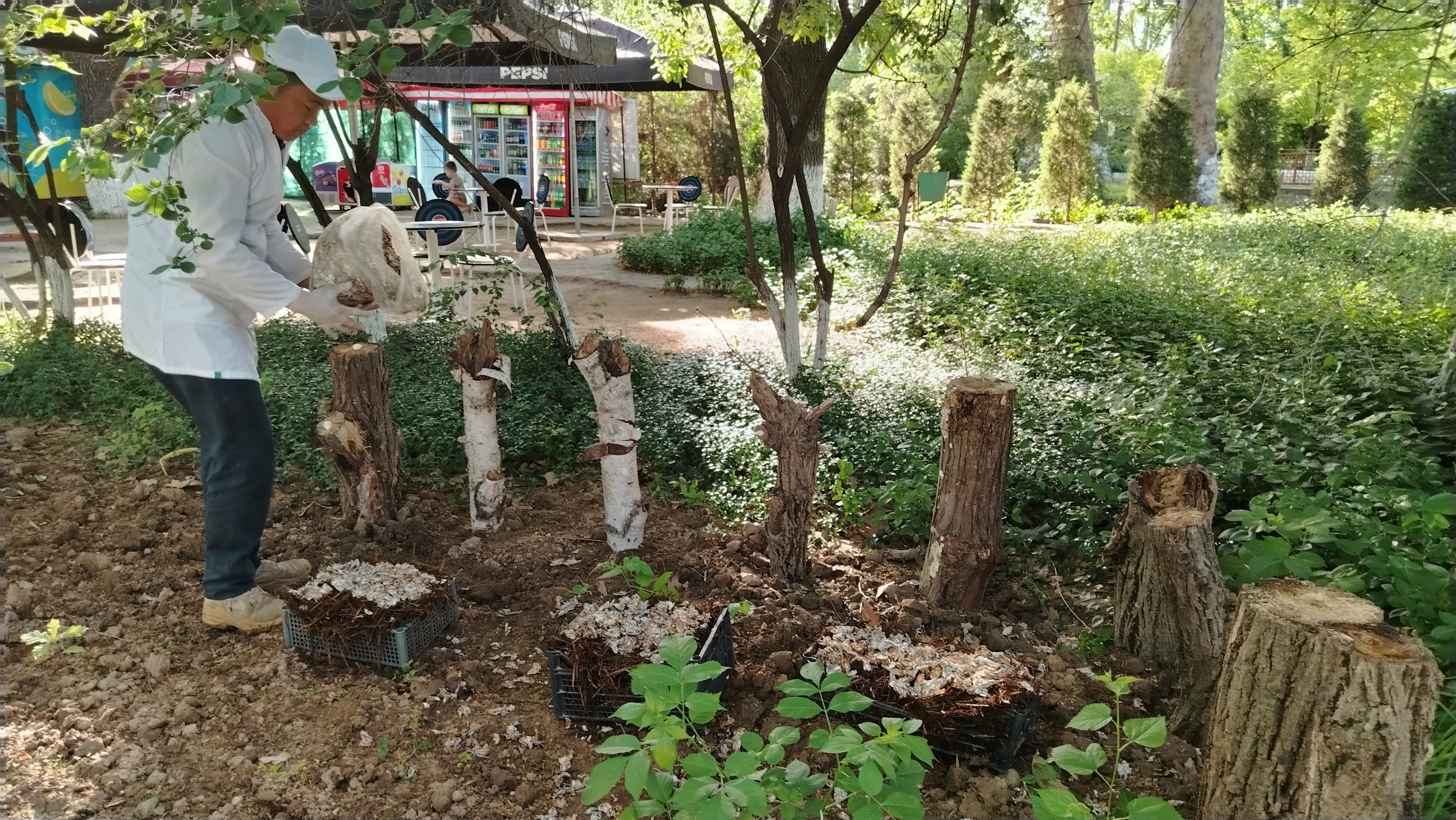
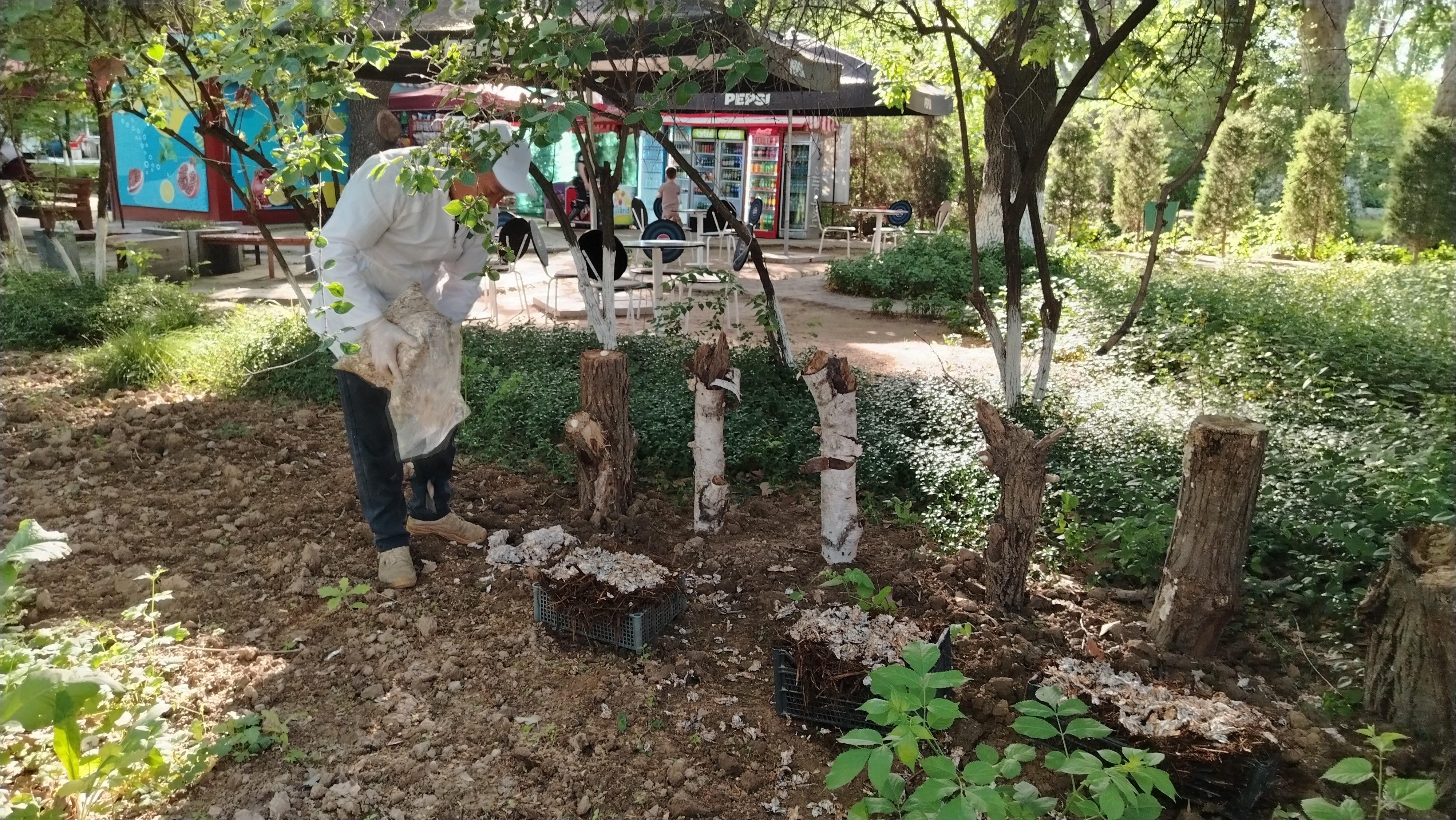
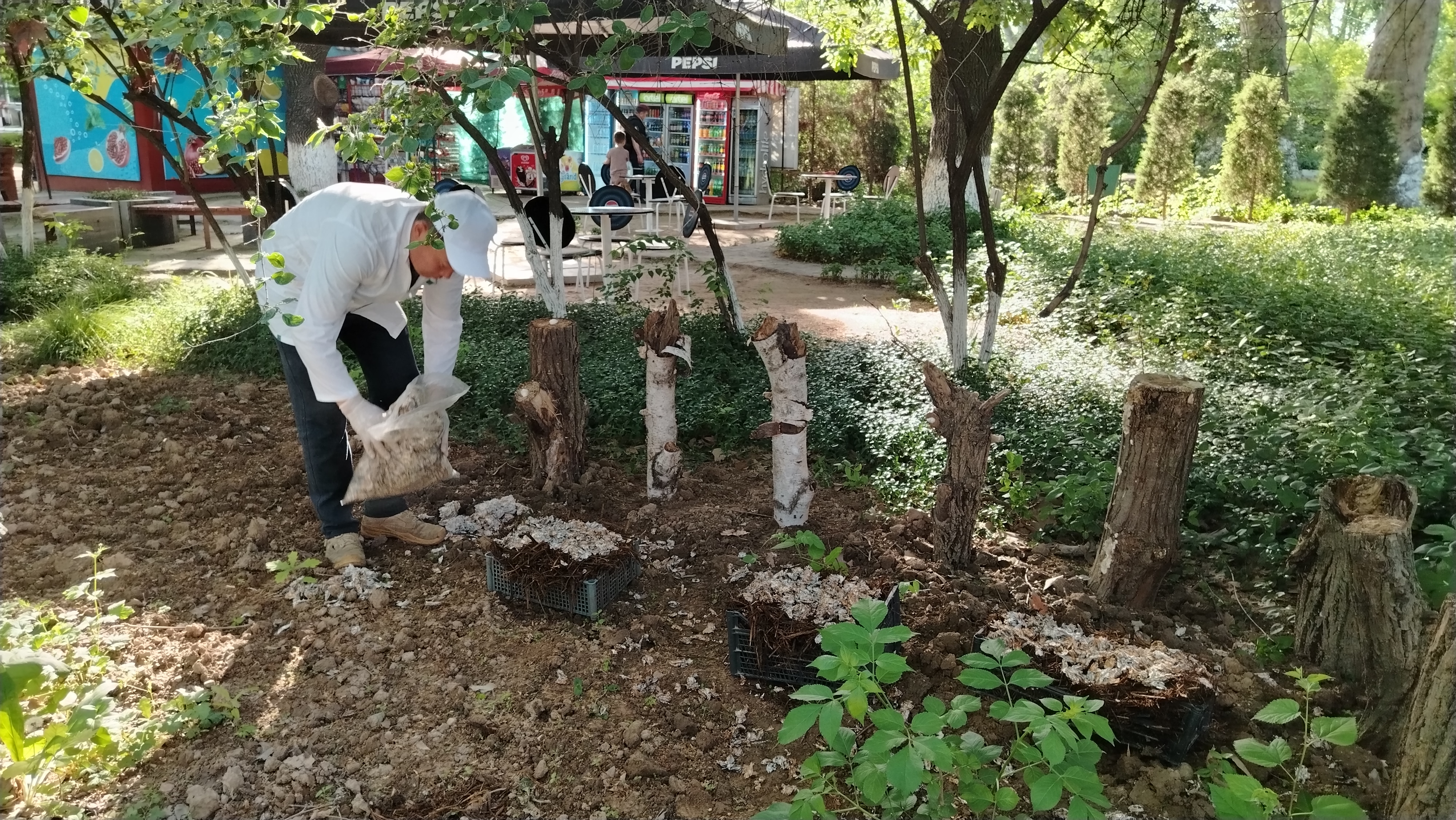
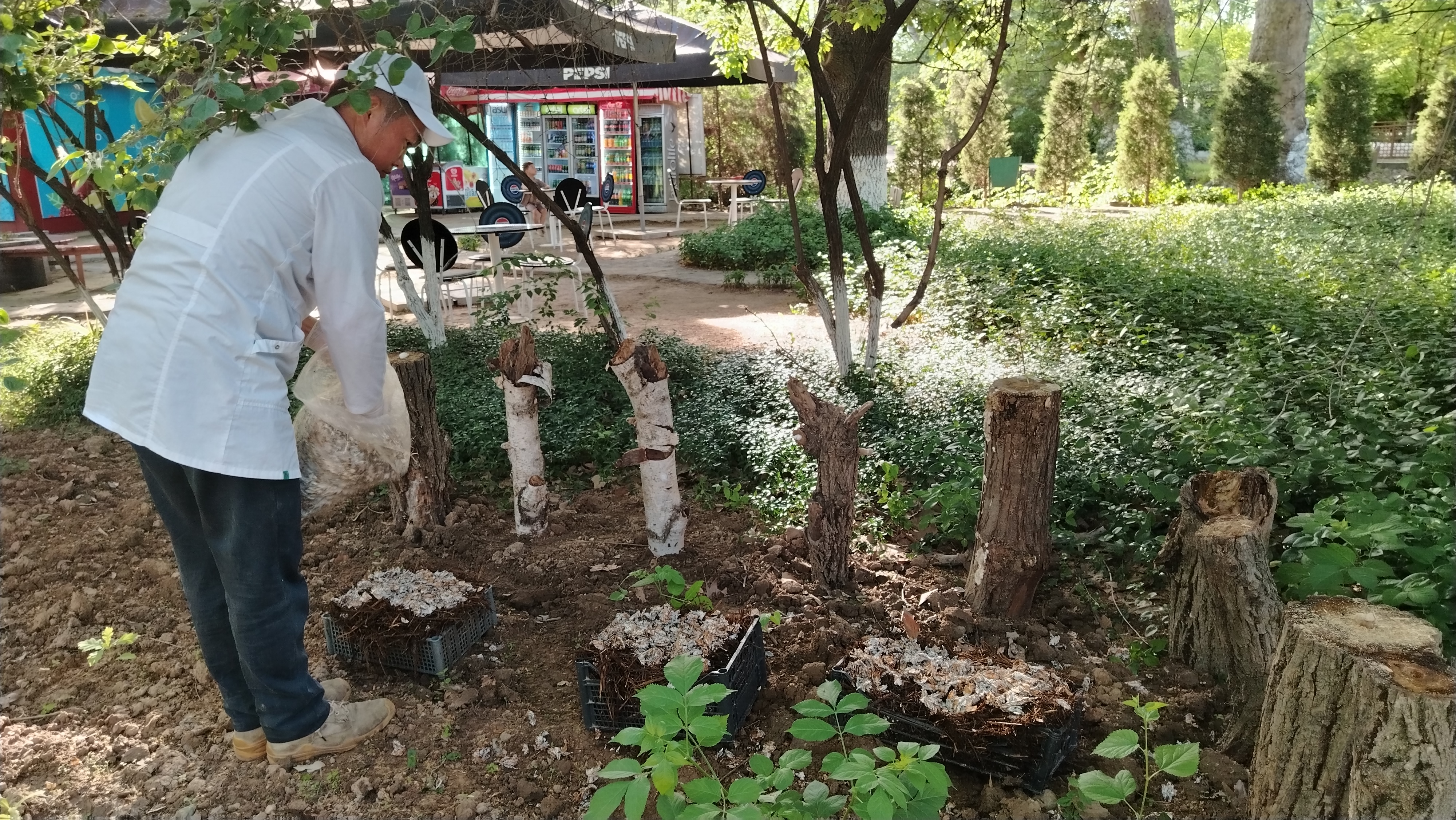
Practical work has begun within the framework of the “Mushroom Garden” project aimed at studying and breeding macromycete fungi in the Tashkent Botanical Garden. This project serves to preserve biodiversity, introduce beneficial fungal species, and develop scientific research.
The following macromycete species were planted within the framework of the project:
Oyster mushroom (Pleurotus ostreatus (Jacq.) P. Kumm. 1871) is a fast-growing and highly productive fungus of food and pharmaceutical value.
Trametes (Trametes versicolor (L.) Lloyd 1920) is a group of fungi that decompose wood, play an important role in the ecological balance, and are used in biotechnology.
Planting was carried out in specially prepared substrates, ensuring optimal humidity and temperature conditions. The dynamics of growth of fungi, their adaptation to the substrate and the processes of fruiting bodies formation are being regularly monitored in the experimental plots.
This “Mushroom Garden” serves as:
an experimental area for scientific research,
a training and practical base for students and young scientists,
and an ecological and educational center for visitors.
In the future, it is planned to introduce new macromycete species, study their biological properties in depth and expand their practical significance within the framework of the project.
Practical work has begun within the framework of the “Mushroom Garden” project aimed at studying and breeding macromycete fungi in the territory of the Tashkent Botanical Garden. This project will serve to preserve biodiversity, introduce useful fungal species and develop scientific research.
The following macromycete species were planted within the project:
Oyster mushroom (Pleurotus ostreatus (Jacq.) P. Kumm. 1871) is a fast-growing and highly productive species of fungi with food and pharmaceutical value.
Trametes (Trametes versicolor (L.) Lloyd 1920) is a group of fungi that decompose wood, play an important role in the ecological balance and are used in biotechnology.
Planting was carried out on specially prepared substrates, ensuring optimal humidity and temperature conditions. The growth dynamics of fungi, their adaptation to the substrate and the processes of fruiting bodies formation are regularly monitored in the experimental plots.
This “Mushroom Garden” serves as:
an experimental site for scientific research,
a training and practical base for students and young scientists,
and an ecological and educational center for visitors.
In the future, the project plans to introduce new macromycete species, conduct in-depth studies of their biological properties, and expand their practical significance.